


For decades, content management has been page-centric. It was page by page that people built a site, designed the site, wrote the site, and optimized the site. Each page had a look, language, and intention.

But when the site was the main or only digital experience, this made sense. Yet that time is long gone. Content needs to be transferrable across devices, platforms, apps and all sorts of interfaces that don’t even look like a page.
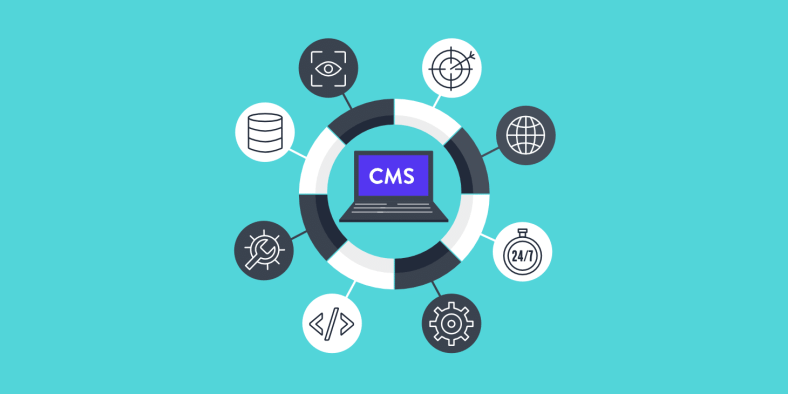
Therefore, it’s no surprise that this logic is helping to accelerate transitions to a more data-centric approach because a data-centric content strategy sees content as structured, reusable data instead of static deliverables; it transforms how we build, scale and iterate digital experiences.
The Issues With Page-Based Models of Content
Page-based models of content tightly connect content to design and presentation. Text, imagery, and elements are often created for a single page and single use.
While this may be intuitive for editors, it collapses quickly when organizations expand their digital ecosystems. Storyblok and Next.js demonstrate how structured, reusable content can power multiple frontend experiences without being locked into a single layout.
When content needs to be repurposed across multiple pages or channels, it’s largely done through copy/paste in traditional systems, which creates duplicate content, variance in quality, and long-term stewardship issues.
As organizations add mobile apps, personalization layers, localization efforts, and additional digital touchpoints, page-based models are rigid and fragile. A minor change means multiple page edits and a redesign necessitates a major content overhaul. Over time, the page becomes a prison instead of a vessel. This is the central reason why organizations fail to scale content operations relying on a page-focused mentality.
What It Means to Be Data-Centric with Content Management
Being data-centric means that the content is structured data rather than focused upon what exists on any one page. Instead of inquiring what should live on a page, teams instead assess what exists and how content can be used. Content can be broken down into usable segments like titles, descriptions, body text, metadata, and relationships between all elements. Each segment has a use beyond presentation.
This means that pages are not the primary source of truth but instead one possible assembling and presentation of content. It makes content query-able, composable and malleable for systems that rely on APIs and multi-channel delivery. Thus, being data-centric does not take pages out of the equation but rather removes the hierarchy of a page as the dominant force, allowing for content to breathe beyond any singular presentation or interface.
Decoupling Content From Presentation Is Transformational
The most important defining factor of data-centric content management is that of decoupling. In page-based construction, content and interface are intertwined, meaning that changing one means disrupting the other. In a data-centric world, content fields are developed that actively separate these concerns for independent design.
This allows front-end developers to construct beautiful experiences while the content remains stable. It empowers fields to exist in realms that are absent from a concept of pages voice integrations, push notifications, etc. Over time, decoupling reduces dependency, increases nimbleness and ensures usability as design patterns change. This is a foundational concern for realizing all other benefits of data-centric management.
Reuse as a Natural by-product of Structured Content
One of the biggest benefits of moving away from a page-centric model is reuse. In a data-centric environment, content is created once and used everywhere it makes sense. Because of structured fields, the same content can be referenced in multiple areas and need not be duplicated.
For example, one product description can drive a product page, a comparison view, a screen on a mobile app, and a support article. One product image can serve the same purpose across these experiences too. Any edits made to the product description or image will automatically update everywhere through a connected data system. Over time this saves tremendous amounts of content debt and keeps experiences aligned with consistent messaging across channels. In the data-centric content management world, reuse is not a hope for editors but a built-in functioning reality.
Eliminate Silos for Omnichannel Deliverable
Page-based content models create silos because each channel requires its own set of pages. Data-centric content management creates no such issues because everything is created as channel-independent data. While channels consume the same content, they do so through their own limitations and interaction models for presentation.
Therefore, omnichannel deliverability is no longer a theoretical ambition but practical inevitability. Content teams will no longer need to manage different versions of the same messaging for web versus mobile versus an email campaign. Over time this saves money and time while allowing users to gain access to consistent information regardless of where they source content. A data-centric content management model sustains omnichannel experiences at scale.
Supporting Personalization Without Content Explosion
Personalization is impossible to achieve in page-centric systems because personalized pages require duplication or new builds entirely. Data-centric content management supports personalization by giving personalized variants space within structured fields to exist, rather than separate pages all together.
Personalization logic must select the right content variant based on context or behavior; however, it can do so without creating content explosion since basic content remains unified. Over time this allows personalization strategies to develop without worrying a content team will need to manage endless personalized pages. In a data-centric world, personalization is a delivery concern not a duplication issue.
Enhancing Content Governance and Quality
Governance more easily applies to content when it’s data-centric. Structured models require fields, validation rules and defined relationships that avoid manual review. Page-centric systems require editors to know the rules of governance without fail and that just doesn’t scale.
With data-centric content, quality expectations are built into the system. It’s more consistent, less prone to error and for compliance needs, a more reliable partner. Over time, governance avoids correcting mistakes as it’s more proactive in getting things right the first time. The more content grows and organizations become more complex, the more data-centric content solutions offer the structural mechanisms necessary to maintain quality.
Making Content Measurable at the Meaningful Level
Analytics in a page-centric world are page-based with little insight into what actually drives engagement or conversion. Data-centric content allows for measurement at the most granular level: headlines, descriptions, calls to action, and so on.
This data allows teams to make decisions not guesswork based on hunches or rudimentary analytics that suggest a whole page redesign. Over time this reduces subjective content strategies in favor of evidence-based approaches. Data-centric content solutions align themselves with the way analytics operations work today, transforming data into an actionable reality instead of static reporting.
Minimizing Costs and Risks Related to Redesigns
Redesigns are one of the biggest costly risks within a page-centric content management system because content is typically built directly within the page layout. Data-centric content management eliminates this as content is decoupled from design.
When a redesign occurs, the frontend team simply decides how existing content will be rendered; it does not transform the content itself and existing content is merely brought into the new design system. Over time, this makes redesigns less risky and more frequent organizations can iterate on a one-off basis and not wait multiple years for a monumental redesign to get everything updated. Data-centric models transform redesigns into low-level technical tasks versus a crisis involving all-new content development.
Compatible With Modern System Architecture
Modern systems are increasingly API-driven, modular and distributed. Page-centric approaches work against this architecture because they assume monolithic renderings and set outputs. Data-centric approaches naturally work with modern systems because they expose content as structured data via APIs.
They operate with content as a first-class system component which allows them to connect to other services, applications, and automation. Over time, content gets integrated into the wider data landscape instead of as an exception. This is critical for a scalable, resilient approach to digital platforms that are already facing large-scale modernization efforts on systems, repositories and the like.
Cultural As Much as Technical Migration
Transitioning from a page-centric to a data-centric approach is as much a cultural migration as it is a technical one. Teams need to get into the mindset of content models, intent and reuse instead of pages and layouts. This requires new patterns, new lexicons and often new roles.
While it may feel difficult early on, the long-term investment is worth it. Clarity, autonomy and confidence build over time as content systems become more predictable and flexible. The transition allows data-centric thinking for teams to plan and create and sustain content in line with product and platform thinking instead of page layout considerations a valuable link for content strategy.
Parallel Content Creation, Design and Development Feasible Like Never Before
The most practical difference between page-centric and data-centric migration is the ability to truly promote parallelized work. Page-centric systems require linearized sequences between content creation, design and development. Designers need final layouts before they can drop in content, and developers need at least pseudo-lay out pages before they can begin.
Such interdependence slows teams down and creates additional coordination overhead. Data-centric management turns content into data. Content teams can finalize their structured entries while design teams iterate on layouts and engineering teams create delivery logic all at once. Because all groups are tapping into the same accessible content model instead of an available page definition, there exist no conflicts despite staggered timelines.
Increased delivery speed and reduced friction over time makes parallelization easier with digital work without necessarily complicating the organizational approach.
Increasing Content Viability Over Time by Modeling Intent Instead of Context
Page-based content is often less viable over time. It’s created for a specific page, project, or moment. When that page is redesigned or taken down, the content is often irrelevant. Data-driven content management increases content viability over time by modeling intent and not context. Content is written to convey meaning, intent, and value not to simply occupy a visual space.
Intent creates the ability for longevity and repositioning over time. For example, an explanatory piece of content might start its life on a landing page, live in an app flow eventually, and be repurposed for onboarding or support somewhere down the line.
This additive process gives content more value with time instead of rendering it expired every few years due to modernized design expectations. Data-centric models make it clear that success can be leveraged through experience, which ensures future efficiencies and sustainability efforts.
Decreasing Editor Cognitive Load and Human Error
Content on a page-centric basis forces editors to carry a heavy cognitive load. They must constantly remember where certain pieces live, which pages need updates, and how changes impact multiple layouts.
This oversight multiplies the chances for mistakes, outdated information, and varied messaging. Data-driven content management decreases this cognitive burden by centralizing instead of dispersing relationships.
Editors work with single sources of truth instead of multiple versions across an ecosystem of pages. Once the content is updated, it’s updated across all channels where applicable without further effort.
Over time, this decreases manual engagement and error rates, as well as the time needed to build confidence across a publishing workflow. Data-centric systems empower editors by allowing the tech to handle reuse and distribution instead of forcing humans to scramble for consistency.
Future-Proofing Content Operations for Automation and AI Implementation
Finally, as automation and AI are ever more integrated into digital ecosystems, page-centric content models serve as barriers to growth. Automated systems require uniform, predictable data input. Data-centric content management is ideal since it exposes data like content to be machine-readable instead of page-mounted documents.
This allows automation efficiencies to accelerate in distribution, optimization, personalization, and lifecycle management; additionally, AI can better assist with analytics, generation, and suggestions when content exists without a page framework.
Over time, organizations that exist without a page framework are more likely to support digital systems without retrofitting their content foundations. It’s not just about scalability in the present day, but also access to future intelligent systems.
Conclusion
The transition from page-oriented to data-oriented content management demonstrates a larger transition in the creation and delivery of digital experiences.
Value is not found in pages anymore instead, it is found in data. Viewing content as structured, reusable data points instead of pages or documents transforms a company’s scalability, agility, and future sustainability.
The move away from page-oriented content management creates less redundancy, fosters omnichannel availability and personalization, and transforms content strategies for contemporary architecture. When everything changes around us, a data-oriented approach makes the most sense for the future.
Watch this space for updates in the Technology category on Running Wolf’s Rant.
Like what you just read? Buy us a coffee to enable us to bring you more content like this.
You're also more than welcome to subscribe to our newsletter to stay in the loop.
Feel free to explore our website or check out our Featured Articles.
Looking for a gift for that special person in your life? Check out Netflorist.co.za, South Africa's top online florist and gift service. They offer flowers, gifts, and hampers for all occasions AND reliable nationwide delivery.
