
Today, I’m diving into the facts about Ancient Rome. This term refers to the Roman civilization from the founding of the city of Rome in the 8th century BC to the collapse of the Western Roman Empire in the 5th century AD.
It includes the periods of the Roman Kingdom, the Roman Republic, and the Roman Empire until the fall of the Western Empire.
Here are 28 Interesting Facts You Might Not Known About Ancient Rome
1. If a man was found guilty of rape in Ancient Rome, his testicles were crushed with two stones.
2. In the courts of Ancient Rome, when a man was testifying, he would swear on his testicles, which is where the term ‘testify’ comes from.

3. In Ancient Rome, red-headed slaves were typically more expensive than other slaves. They were often thought to bring good luck.
4. The Roman Emperor Caligula had so little respect for the Roman Senate, he tried to install the horse as a senator and even tried making him a consul. He was assassinated before he could go through with it though.
5. In 200 AD female gladiators (referred to as gladiatracies) were banned by Emperor Septimius Severus. Gladiators were either born poor or were being punished for something. These female gladiators were rare, but they were seen as a symptom of a corrupt society.
6. In Ancient Rome, the punishment for killing one’s father (parricide) was poena cullei or “penalty of the sack.” The punishment consisted of being sewn up in a leather sack, with an assortment of live animals including a dog, snake, monkey, and a chicken or rooster, and then being thrown into water.
7. Roman priests raised sacred chickens that were used to interpret omens. They were used to predict the outcome of military battles. The chickens were fed grain before a planned battle. If they ate the grain, it suggested that the outcome of the planned battle would be favourable.
If they didn’t eat the grain, it was considered to be a bad omen and the battle would be abandoned. Publius Claudius Pulcher (a Roman naval commander) ignored a bad omen and threw the chickens overboard before a battle in 249 BC. He suffered a humiliating defeat.
8. Ancient Romans dyed their hair black. Blonde hair was associated with prostitutes or French / German slaves. The trend started declining when Augustus Caesar became the first Roman Emperor. He had blonde hair.
9. Locusta of Gaul conspired with Nero’s mother to kill his father (the Emperor Claudius). They killed him with a batch of poisoned mushrooms. After this, Nero became the Roman Emperor. During his reign, he issued more contracts to Locusta to kill his rivals. She eventually she became an ‘agent of death-by-poison’, getting contracts and assignments and became a state-funded contract killer (the first of her kind ever in human history).
Nero killed himself with his own dagger before he could be punished for his crimes in 64 AD. Locusta’s time came to pay for her sins and it is said that she was ordered by the senate to be publicly raped by a specially trained giraffe and then torn apart by wild animals.
10. Rome was the first city in the history of human kind to have a population of 1 million people. The first sensus was actually held in the 2nd century BC. The next city in Europe to have a population of this size was Victorian London in the 19th Century AD.
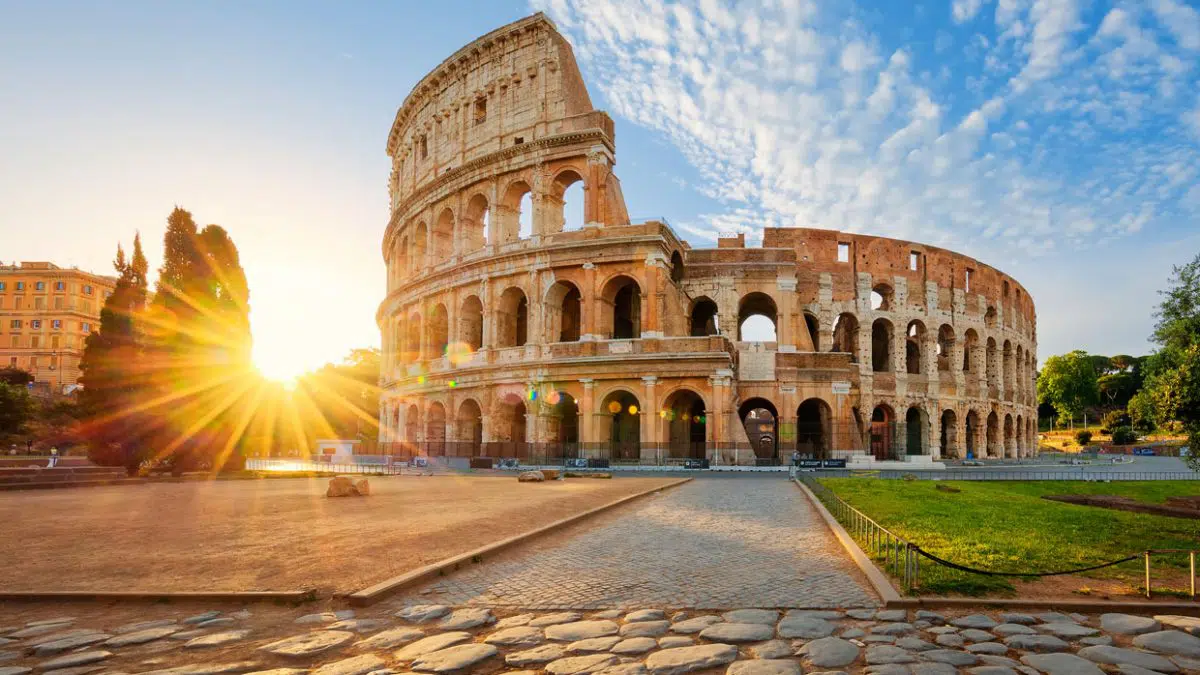
11. The Colosseum was completed by 80 AD. It took 8 years to construct. It was originally called the Flavian Amphitheatre and in its prime, it could accommodate 85,000 bloodthirsty spectators.
12. The Circus Maximus is bigger than the Colosseum and could accommodate over 150,000 fans. It was built to host chariot races and other events like simulations of famous battles, gladiator fights and athletic competitions. The first construction of Circus Maximus dates back to the 6th century BC, after which several emperors had the stadium expanded or rebuilt after major fires. It was in use until 549 AD.
13. The Alcántara Bridge over the Tagus River in Spain is one of the most beautiful. It was completed in 106 AD under Roman Emperor Trajan. ‘I have built a bridge which will last forever,’ reads an original inscription on the bridge. It’s still in use today.
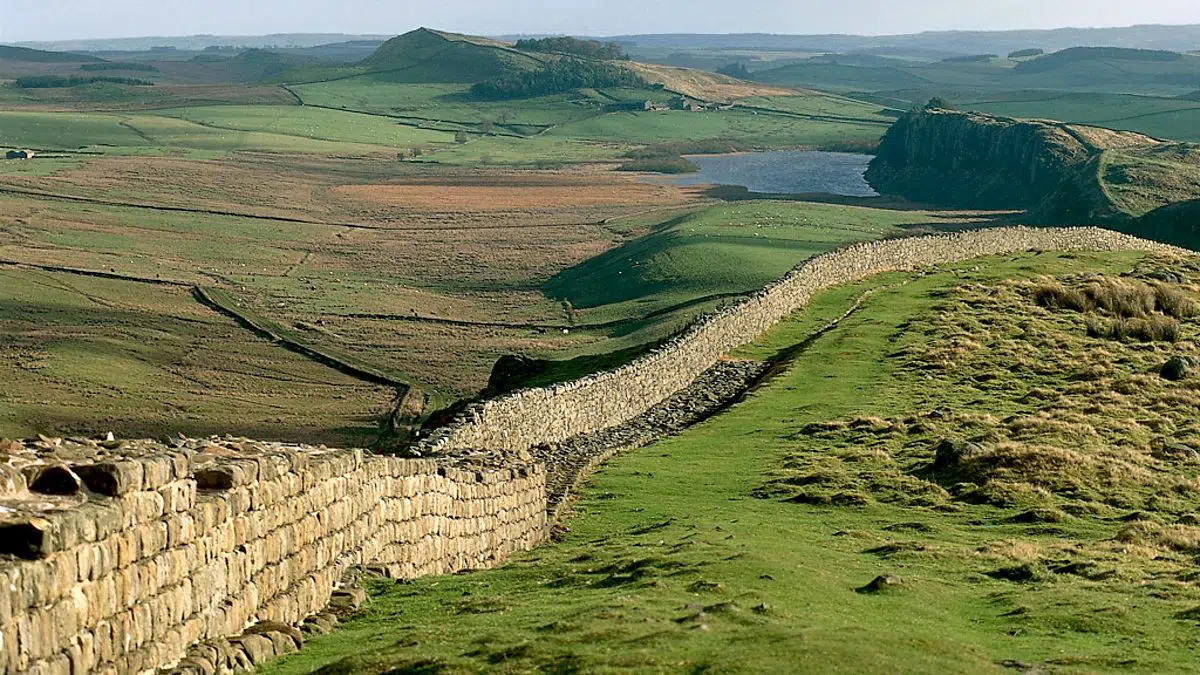
14. Hadrian’s Wall is both the best-preserved frontier of the Roman Empire and one of Britain’s most awe-inspiring historic landmarks. The wall is named after Emperor Hadrian. It’s 117 km (73 miles) long. The wall stretched from Wallsend and the banks of the River Tyne near the North Sea to the Solway Firth in the Irish Sea, essentially spanning the entire breadth of Britain.
15. Gladiator blood was recommended by Roman physicians to aid various ailments, including epilepsy and infertility.
16. In the first Century BC, the poet Gaius Valerius Catullus addressed two of his critics, another poet Furius and a senator Aurelius, in a poem considered so vulgar and obscene that it was not translated outside of Latin until the 20th Century.
17. In Ancient Rome, only free-born men were allowed to wear togas, a sign of Roman citizenship. Women wore stolas, the female version of togas, made from linen.
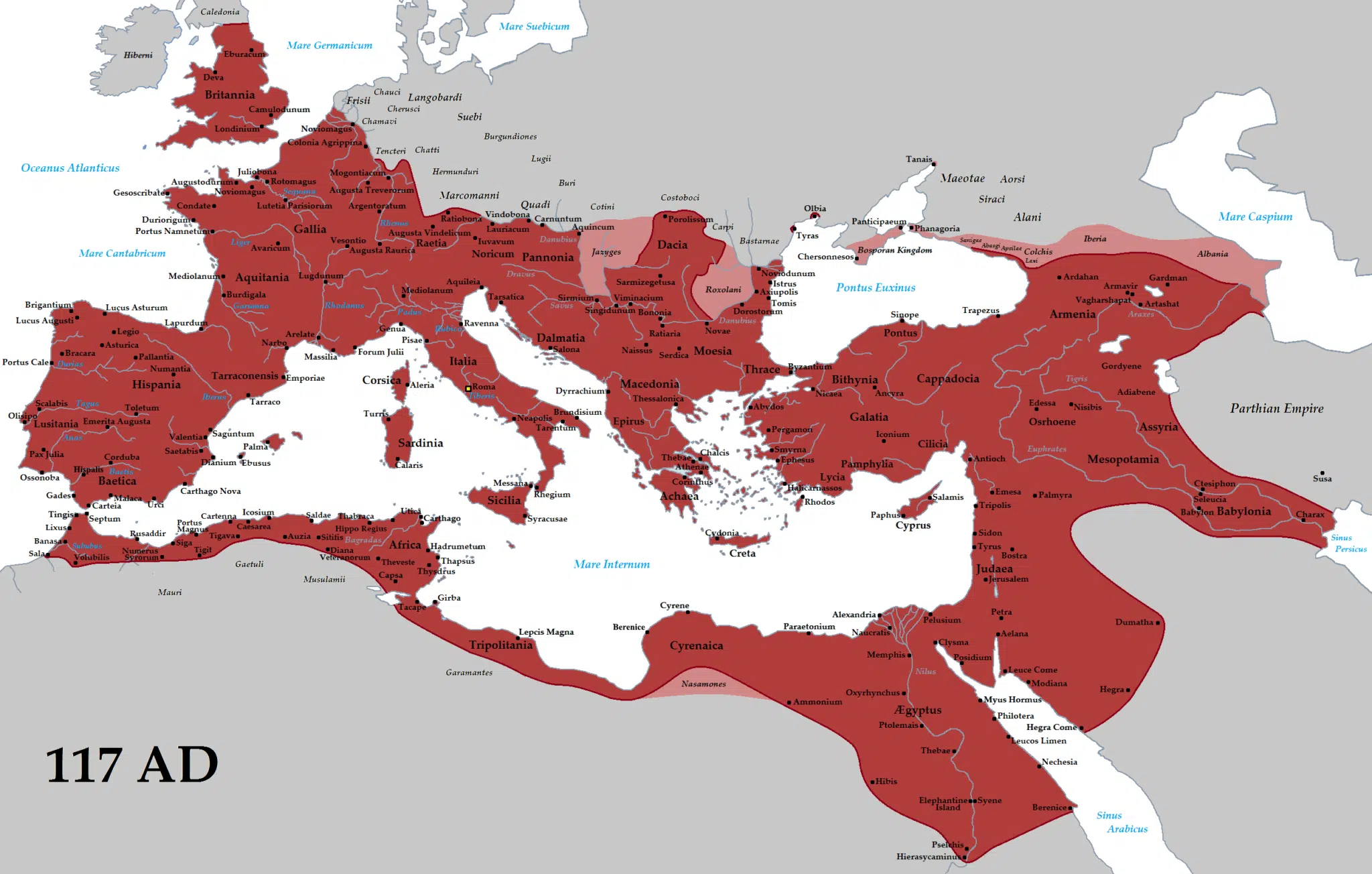
18. Ancient Rome was among the largest empires in the ancient world. At its height in 117 AD the empire had an estimated 50 to 90 million inhabitants (roughly 20% of the world’s population at the time) and covered around 5 million square kilometres (1.9 million square miles).
19. By the early fourth century AD, the Romans had built a road network of 85000 kilometres (53,000 miles).
20. The Battle of the Teutoburg Forest in 9 AD probably stopped Rome’s expansion at the River Rhine. A Germanic tribal alliance, led by a Roman-educated Roman citizen, Arminius, utterly destroyed three legions. Such was the shock of the defeat that the Romans retired the numbers of two of the destroyed legions and drew the Empire’s North-Eastern frontier at the Rhine.
21. Dormice were considered a delicacy – the Romans would stuff these large mice with pork and season them with pepper and broth before cooking.
22. Flamingo tongue was a prized dish among the Roman elite. Flamingos were seen as a status symbol, and their tongues were highly sought after at lavish banquets.
23. The Romans also ate exotic meats like ostrich, giraffe, and camel, which were rare delicacies.
24. Contrary to popular belief, gladiators rarely fought to the death. They were often well-trained and valued for their skills, akin to modern-day sports stars. Many were slaves, but some achieved fame and wealth through their victories in the arena.
25. Known as one of the world’s earliest sewage systems, the Cloaca Maxima was crucial for urban sanitation in Rome. It helped drain local marshes and remove waste from the city, showcasing Roman engineering prowess.
26. Romans used urine as mouthwash and teeth whitener. Urine was collected in pots on street corners and sold to fullers (cloth cleaners) and to people who wanted whiter teeth. The ammonia in urine acted as a bleaching agent. Roman poet Catullus even mocked a man for having such bright teeth, implying he used it regularly.
27. Ancient Rome invented the concept of a “shopping mall.” Trajan’s Market, built around 100-110 AD in Rome, was a multi-storey complex of over 150 shops and offices, often considered the world’s first shopping centre. It sold everything from food and spices to clothing.

28. Julius Caesar was once kidnapped by pirates. While sailing the Aegean Sea, he was captured by Cilician pirates who demanded a ransom of 20 talents of silver. Caesar reportedly laughed at the amount, saying he was worth at least 50. Once freed, he raised a fleet, hunted the pirates down, and had them crucified exactly as he had promised them he would while still their captive.
Well, there you have it 28 Interesting Facts You Might Not Have Known About Ancient Rome. If I left out something interesting, feel free to leave a comment below.
Watch this space for updates in the Facts category on Running Wolf’s Rant.
Want to promote your business, event, product or service? We get more than 14,000 pageviews a month! Contact us for marketing and advertising options.