


World War I, known initially as the Great War, was a defining event in modern history that reshaped global politics and left lasting effects on the 20th century. Fought from 1914 to 1918, it involved nations across multiple continents and introduced unprecedented levels of destruction and human suffering.
The brutal realities of trench warfare and new military technologies made it one of the deadliest conflicts ever. While some hoped it would be “the war to end all wars,” its aftermath instead set the stage for further global turmoil.
There’s probably a lot that you don’t know about World War I, but today my aim is to change that…
Here are 38 Interesting Facts You Might Not Know about World War I
1. The Assassination of Archduke Franz Ferdinand (June 28, 1914) was the immediate trigger for World War I. Serbian nationalist Gavrilo Princip killed the heir to the Austro-Hungarian throne.
2. Austria-Hungary, with Germany’s backing, issued Serbia demands that were nearly impossible to accept. When Serbia refused some terms, Austria-Hungary declared war, triggering a chain reaction among allied nations.

3. A complex web of treaties meant that when Austria-Hungary attacked Serbia, Russia stepped in to defend Serbia, Germany backed Austria-Hungary, France and Britain supported Russia, and a local conflict escalated into a global war. Serbian nationalists wanted independence from Austria-Hungary, while German nationalism pushed for military expansion and dominance in Europe.
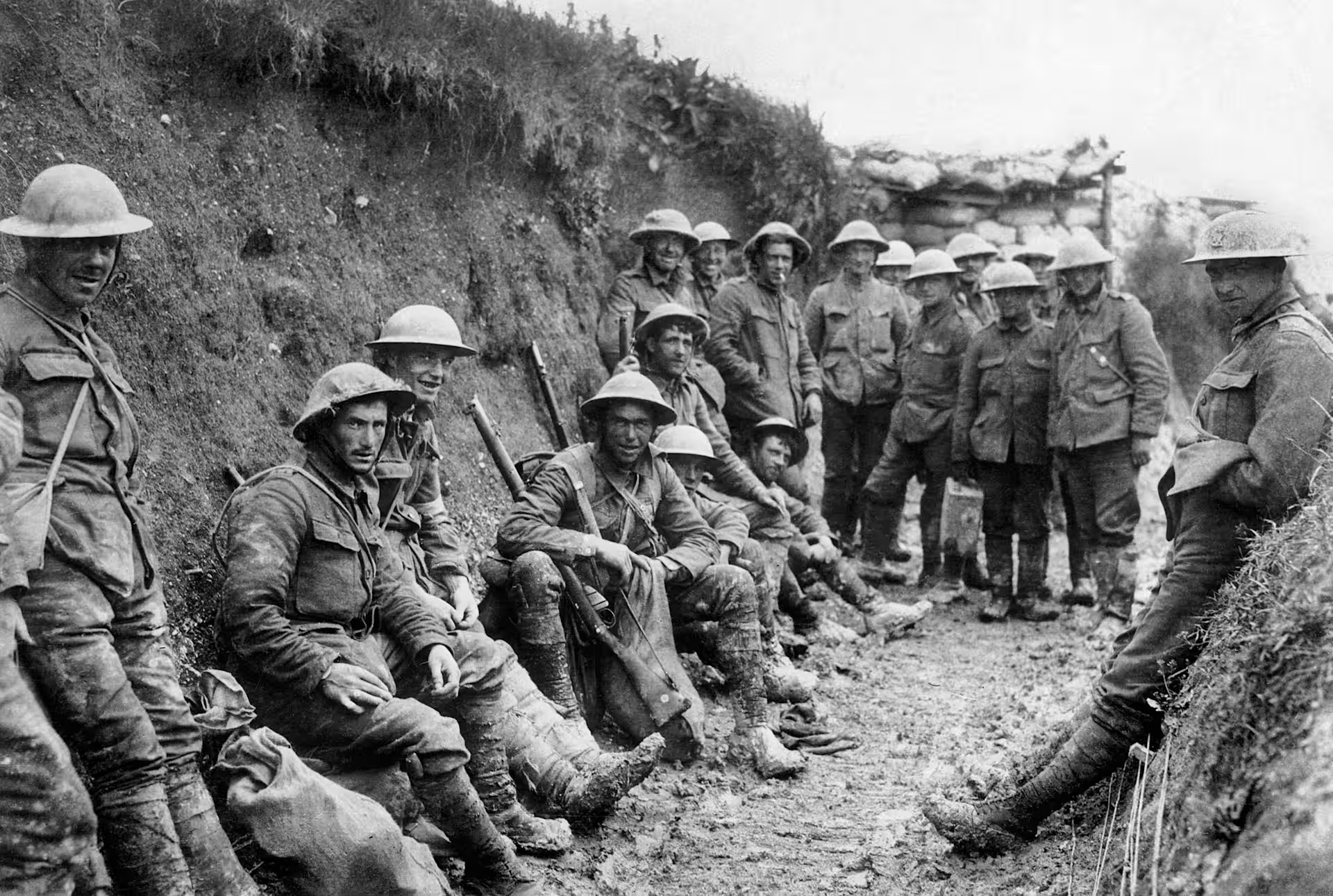
4. World War I is infamous for its extensive use of trench warfare. Soldiers lived in muddy, rat-infested trenches, sometimes for months, facing constant threats from enemy fire, disease, and harsh weather. The Western Front alone had over 40,000 kilometres (25,000 miles) of trenches by the war’s end.
5. Tanks were introduced during World War I, with the British deploying the first ones in 1916 during the Battle of the Somme. Called “landships” initially, they were a game-changer, though early models were slow and prone to breakdowns.
6. Millions of animals played vital roles. Horses hauled supplies, dogs carried messages or sniffed out wounded soldiers, and even pigeons delivered critical communications—over 100,000 pigeons were used, with some earning medals for bravery.
7. In December 1914, an unofficial ceasefire occurred along parts of the Western Front. British and German soldiers sang carols, exchanged gifts, and even played soccer in no-man’s-land, a rare moment of humanity amid the carnage.
8. The war claimed around 16 million lives (military and civilian) and wounded over 20 million more. The first day of the Battle of the Somme alone (July 1, 1916) saw nearly 60,000 British casualties, the bloodiest day in British military history.
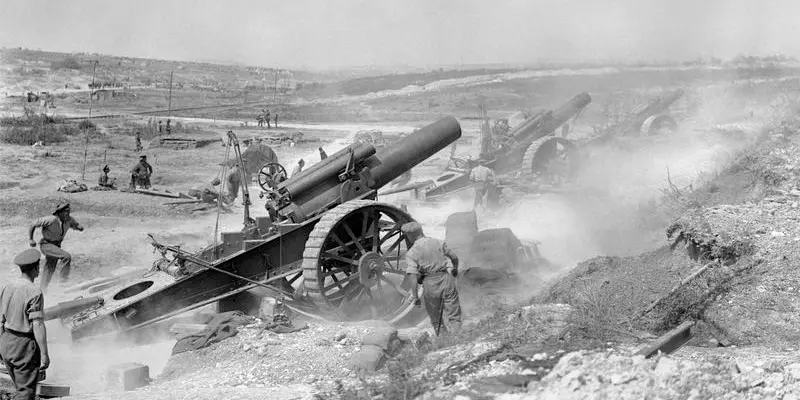
9. Machine guns, poison gas (like mustard gas), and airplanes were introduced, but generals often stuck to outdated strategies like mass infantry charges, leading to staggering losses.
10. The war decimated a generation of young men, particularly in Europe. In Britain, it’s estimated that nearly one in three men aged 19–22 in 1914 didn’t survive the war, leaving lasting social scars.
11. While focused in Europe, the war involved over 30 countries across multiple continents. Fighting occurred in Africa, Asia, and the Middle East, and the U.S. entry in 1917 shifted the tide.
12. On August 22, 1914, the British captured the German colony of Togoland in West Africa in just 38 minutes, making it one of the briefest military campaigns ever recorded.
13. The 369th Infantry Regiment, an African-American unit from the U.S., served with distinction under French command. They spent 191 days in combat—more than any other American unit—and never lost a trench or a man to capture, earning the nickname “Hellfighters” from the Germans.
14. World War I was the first major conflict to use cinema as propaganda. Films like The Battle of the Somme (1916) were shown to millions, blending real footage with staged scenes to boost morale and recruitment.
15. German U-boats sank over 5,000 Allied ships, introducing unrestricted submarine warfare. The sinking of the RMS Lusitania in 1915, killing 1,198 passengers (including 128 Americans), was a key factor in pushing the U.S. toward war.
16. To confuse German bombers, the French built a decoy version of Paris north of the real city, complete with sham buildings, lights, and a replica railway. It was never fully tested, as the war ended before it saw significant use.
17. The war helped spread the 1918 Spanish Flu pandemic, which killed 50–100 million people worldwide—more than the war itself. Crowded trenches and troop movements created perfect conditions for the virus to spread.
18. Poets like Wilfred Owen and Siegfried Sassoon captured the war’s brutality in vivid verse. Owen’s “Dulce et Decorum Est,” written from the trenches, remains a haunting anti-war masterpiece. Tragically, Owen died just one week before the armistice.
19. The final soldier killed in action was American Private Henry Gunther, who died at 10:59 a.m. on November 11, 1918—one minute before the armistice took effect at 11:00 a.m., ending the war.
20. During the Battle of Messines in 1917, the British detonated 19 massive underground mines beneath German lines, killing around 10,000 soldiers instantly. The blasts were so loud they were heard 140 miles away in London.
21. German pilot Manfred von Richthofen, the “Red Baron,” shot down 80 enemy planes, making him the war’s top ace. Flying a bright red Fokker triplane, he became a legend before being killed in 1918 at age 25.
22. South Africa entered the war on August 4, 1914, when Britain declared war on Germany. As a Dominion of the British Empire, South Africa had limited control over its foreign policy and was automatically drawn into the conflict, despite only achieving Union status in 1910.
23. Not all South Africans supported the war. In 1914, pro-German Afrikaners, still bitter from the Second Boer War (1899–1902), launched the Maritz Rebellion against the government. Led by Manie Maritz, about 12,000 rebels sought to overthrow the pro-British government and align with Germany. The uprising was crushed by loyal forces under Louis Botha and Jan Smuts by early 1915.
24. One of South Africa’s first major contributions was the invasion of German South-West Africa (now Namibia). Starting in September 1914, South African forces, led by Prime Minister Louis Botha, captured the territory by July 1915, securing key German naval and wireless stations for the Allies.
25. South Africa played a significant role in the East African Campaign against German forces in German East Africa (modern-day Tanzania) in World War I. Under General Jan Smuts, South African troops, including the 1st South African Brigade, fought from 1916 onward. The campaign was grueling, with more casualties from disease (like malaria) than combat, but it tied down German resources.
26. Over 7,000 South African soldiers served on the Western Front, most notably in the Battle of Delville Wood during the Somme Offensive in July 1916. The 1st South African Infantry Brigade suffered devastating losses—over 80% casualties—holding the position against German assaults, earning a reputation for bravery.
27. South Africa’s ports, like Cape Town and Durban, were vital for Allied shipping routes around the Cape of Good Hope. The country also supplied two-thirds of the British Empire’s gold, crucial for funding the war effort, with exports tightly controlled to prevent Germany from accessing it.
28. Prime Minister Louis Botha and Defence Minister Jan Smuts, both former Boer generals who had fought Britain, became trusted members of the British Imperial War Cabinet. Smuts, in particular, gained international prominence, later influencing the formation of the League of Nations.
29. The war exposed the fragility of Russia’s Tsar Nicholas II’s regime. He took personal command of the army in 1915, leaving domestic governance to his unpopular wife, Tsarina Alexandra, and her advisor, Rasputin. Military failures and economic collapse fueled discontent.
30. World War I directly triggered the Russian Revolution. By early 1917, food shortages, inflation, and war weariness led to mass strikes and the February Revolution, forcing Nicholas II to abdicate. The Provisional Government continued the war, but morale collapsed.
31. After the October Revolution, the Bolsheviks, led by Lenin, seized power in November 1917. They signed the Treaty of Brest-Litovsk with Germany on March 3, 1918, ending Russia’s involvement. Russia ceded huge territories—Poland, Ukraine, the Baltics, and Finland—losing 25% of its population and vast resources.
32. Signed in 1919 to end the war, it imposed harsh penalties on Germany, sowing seeds of resentment that fueled World War II. The treaty’s signing took place in the Hall of Mirrors, exactly where the German Empire was proclaimed in 1871—poetic irony.
33. France lost around 1.4 million soldiers—about 4% of its total population and 10% of its adult male population. On average, 890 French soldiers died daily from 1914 to 1918, with the Battle of Verdun (1916) alone claiming over 300,000 lives on both sides.
34. Germany suffered approximately 2 million military deaths and 4.2 million wounded in World War I. The war killed about 13% of its pre-war male population aged 15–49, leaving deep social and economic wounds.
35. The British Empire lost over 900,000 soldiers, with the United Kingdom itself accounting for about 700,000. Including dominions like Canada (61,000), Australia (60,000), and South Africa (7,000), the empire’s total casualties exceeded 3 million in World War I.
36. The Ottoman Empire’s military deaths are estimated at 700,000–800,000, but civilian losses were far higher—up to 2.5 million—due to famine, disease, and the Armenian Genocide, bringing its total casualties to over 3 million.
37. Civilian deaths totaled around 6–7 million, with many caused indirectly by famine, disease, and displacement rather than direct fighting. Belgium and Serbia were hit hardest relative to population, with Serbia losing up to 17% of its people (military and civilian combined).
38. The sheer scale of World War I’s casualties—enabled by industrial warfare and prolonged trench stalemates—left a lasting mark on the 20th century.
Well, there you have it, 38 interesting facts you might not have known about World War I. If I’ve left out something important, feel free to comment below.
Watch this space for updates in the Facts category on Running Wolf’s Rant.
Like what you just read? Buy us a coffee to enable us to bring you more content like this.
You're also more than welcome to subscribe to our newsletter to stay in the loop.
Feel free to explore our website or check out our Featured Articles.
Looking for a gift for that special person in your life? Check out Netflorist.co.za, South Africa's top online florist and gift service. They offer flowers, gifts, and hampers for all occasions AND reliable nationwide delivery.
