
Few terms have spread across television marketing as rapidly, or become as confusing, as Mini LED. The label appears on flagship sets and budget models alike, often on screens with vastly different price tags.
At its core, Mini LED technology simply utilizes a smaller LED chip, roughly a fifth the size of the LED used in a conventional LCD television backlight.
Because each chip is significantly smaller, manufacturers can pack thousands more behind the same screen, arranged far more densely than standard LCD technology ever allowed.
The Importance of Density and Dimming Zones
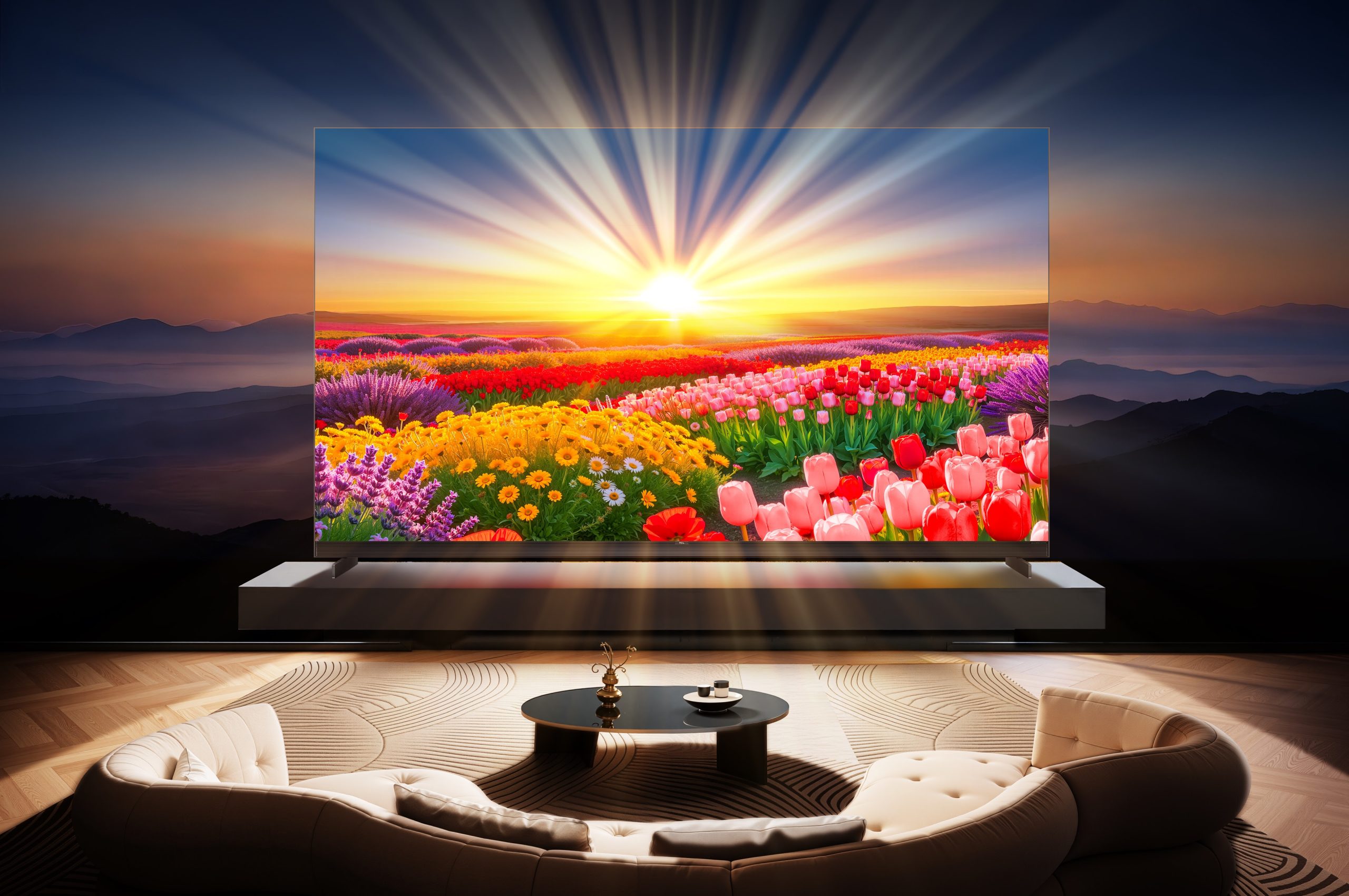
This high density is what makes the technology so revolutionary. More LEDs mean the backlight can be divided into many more independently controlled zones.
These small clusters of light can be brightened or dimmed on their own, rather than the entire screen lighting up or dimming as a single block. When executed well, this translates into deeper blacks, brighter highlights, and far more visible detail in scenes that mix light and shadow.
In practice, however, the words on the box only describe the physical size of the LED chip. The label says nothing about how many chips are used, how they are arranged, or how intelligently their brightness is controlled. Two televisions can carry the exact same label and produce drastically different picture quality.
Three Factors to Consider Before Buying
What separates a genuine Mini LED experience from a basic one comes down to three crucial hardware factors that shoppers should verify before making a purchase.
1. Hardware Dimming
Genuine performance depends on hardware local dimming, which physically controls the brightness of individual LED clusters zone by zone. Software-based or virtual dimming relies heavily on image processing, providing less precise control and often resulting in light leakage and lower perceived contrast.
2. Dimming-Zone Counts
The number of independently controlled zones determines how precisely a television can separate light from shadow. While a few hundred zones can meaningfully improve contrast, panels equipped with several thousand zones provide vastly superior and more precise backlight control.
3. Full Array Architecture
Backlight architecture is the most fundamental factor. Edge-lit designs place LEDs around the screen’s perimeter, and basic direct-lit designs typically switch the backlight on or off as a single block. Genuine Mini LED performance requires Full Array Local Dimming (FALD), where LEDs are distributed across the entire back of the panel with each zone independently controlled.
Market Leadership and Execution
FALD architecture underpins the entire TCL Mini LED range, from entry-level models through to their flagship line. Alvin Wang, General Manager of TCL South Africa, notes that while the technology is often discussed as a single entity, it is actually a family of approaches with vastly different results.
He emphasizes that hardware dimming, zone count, and backlight architecture are the true deciding factors that consumers should interrogate regardless of the brand.
This commitment to authentic hardware architecture has driven significant market growth for the brand. According to Omdia’s global shipment data for the first half of 2026, TCL ranked number one globally by Mini LED television shipment volume, recording 2.43 million global shipments during the period and marking a massive 77.1% year-on-year increase.
Watch this space for updates in the Hacks category on Running Wolf’s Rant.
Want to promote your business, event, product or service? We get more than 14,000 pageviews a month! Contact us for marketing and advertising options.