
Seedance 2.5 can take audio and visual references in the same request, so I wanted to see how it might handle a music visual with no performer at all: just an empty rehearsal room, a slow bass figure, and a camera that rises as the energy builds. This is my plan for that imagined teaser, from first frame to final title.
A music visual does not always need a performer at its center. For an imagined teaser accompanying an original instrumental, I want to begin with the room just before rehearsal: an amplifier on the floor, a cable crossing the boards, and a patch of light reaching an empty chair.
The project would turn those ordinary objects into a short sequence that follows the feeling of the music without pretending to document a real band’s session.
My proposed soundtrack is a piece I would create or obtain permission to use, built around a slow bass figure and a spare percussion pattern. I would choose a short excerpt with a clear change in intensity.

That change gives the visual a useful destination. Instead of illustrating every beat, I want the scene to become slightly more open as the music gathers energy.
The initial image would be an original photograph or drawing of the room. I would keep visible logos out of the composition and avoid borrowing the appearance of a recognizable musician.
A worn chair and a coiled cable are enough to suggest rehearsal. Adding posters, multiple instruments, and a crowd would make the frame less distinctive by asking it to explain too many things at once.
Let the bass line set the pace
I would map the excerpt before generating a shot. The first four seconds would hold close to the cable on the floor. Over the next six seconds, the camera would rise slowly toward the chair. The final six seconds would reveal the larger room as the percussion becomes more present. This is a proposed edit structure, not a claim that a tool will automatically understand every musical accent.
The room’s gradual reveal is the part I would develop through Seedance 2.5. Its support for audio and visual references gives me a way to bring the music excerpt and the room design into the same creative request.
I would describe the desired relationship explicitly: restrained movement at the beginning, then a wider view as the phrase opens. The music should guide the visual rhythm rather than serve as decoration added after an unrelated clip.
I would not request a light flash on every beat. That could make a gentle instrumental feel like a club promo and reduce the usefulness of the calmer opening. The visual change can occur across a phrase instead of matching individual drum hits. For this concept, a slow reveal feels closer to the mood than a succession of rapid cuts.
Give each object a reason to be there
The cable would be the foreground guide, leading toward the amplifier and then the empty chair. I would arrange it as a simple curve rather than a tangle. Its purpose is compositional: it gives the camera somewhere to begin and connects the lower part of the image to the room beyond. It should not lift into the air or move like a living thing.
My first Seedance 2.5 prompt would name the static objects and reserve movement for the camera and a subtle shift of light. I would ask for the chair legs, amplifier shape, and floorboards to remain consistent. If the draft turns the cable into a different object during the camera rise,
I would shorten the move or simplify the reference composition. The music does not justify losing the physical identity of the scene.
I would also keep the space recognizable between shots. A second reference could show the same room from a wider angle, with the chair in the same position.
Mixing photographs from unrelated rehearsal spaces would introduce conflicting architecture and lighting. A coherent small room gives the sequence a stronger identity than several impressive but incompatible backgrounds.
Build a reveal that leaves room for a title
Seedance 2.5 supports directed camera movements, which makes a controlled rise and pullback a plausible starting point for this teaser. I would specify a gentle pace and a final framing with clear wall space above the chair.
That empty area has a practical purpose: it can hold the track title in the finished edit. I would not generate the lettering as part of the room itself.
The title would arrive late, once the camera is close to its final position. I would set it in an editor using the artist’s approved spelling and the actual release information, if any. For an early concept with no announced release, I would leave the date out. The film can communicate a mood without inventing a launch or implying an endorsement by a real musician.
A vertical version might need different framing from a horizontal one. I would prepare the main composition for its intended channel instead of assuming a crop will preserve the cable, chair, and title area. Seedance 2.5 offers several aspect ratios, but the composition still needs to be designed for the selected shape. A narrow frame can make the rising camera feel intimate if the important objects stay comfortably inside it.
Keep the finished music intact
Although the model offers synchronized sound generation, I would keep the original licensed or self-made excerpt as the final soundtrack in my editor.
That gives me control over its exact timing and avoids presenting a generated variation as the artist’s recording. Any ambient sound from the generated clip would be reviewed separately and muted if it competes with the instrumental.
The edit would then become a conversation between the picture and the actual audio. If the camera reaches the wider view too early, I could trim the opening hold or regenerate a slower movement.
If the music’s strongest change falls near the end, I would preserve enough time after the reveal for the title to remain readable. The goal is a sequence that feels deliberate when heard and seen together.
I would compare a quiet version with one containing a faint room ambience, but I would not assume that more sound means more atmosphere.
A clean instrumental may be all the teaser needs. Listening on headphones and a small speaker would help me identify whether any added room noise masks the bass figure that originally inspired the concept.
Decide where the finishing effort belongs
Before producing several versions, I would check Seedance Pricing while estimating how many drafts and higher resolution finishes the project can support.
My first tests would concentrate on the camera rise and the stability of the room. Since upscaling is billed separately, I would reserve it for a composition that already works rather than spend on polishing an unresolved movement.
For the final review, I would watch the clip from the beginning without stopping, then inspect the camera rise frame by frame. The room should remain believable as an imagined space, the title should have time to register, and the instrumental should retain its original character.
I would share the result as a created music visual, with the real recording credited appropriately. The idea is simple: let an empty room suggest the anticipation of music about to happen, then give the listener a clear invitation to hear more.
The real test of any AI video tool is whether it serves the song, not the other way around. Keep the concept simple, protect the original audio, and let the room do the talking.
More info about Seedance 2.5
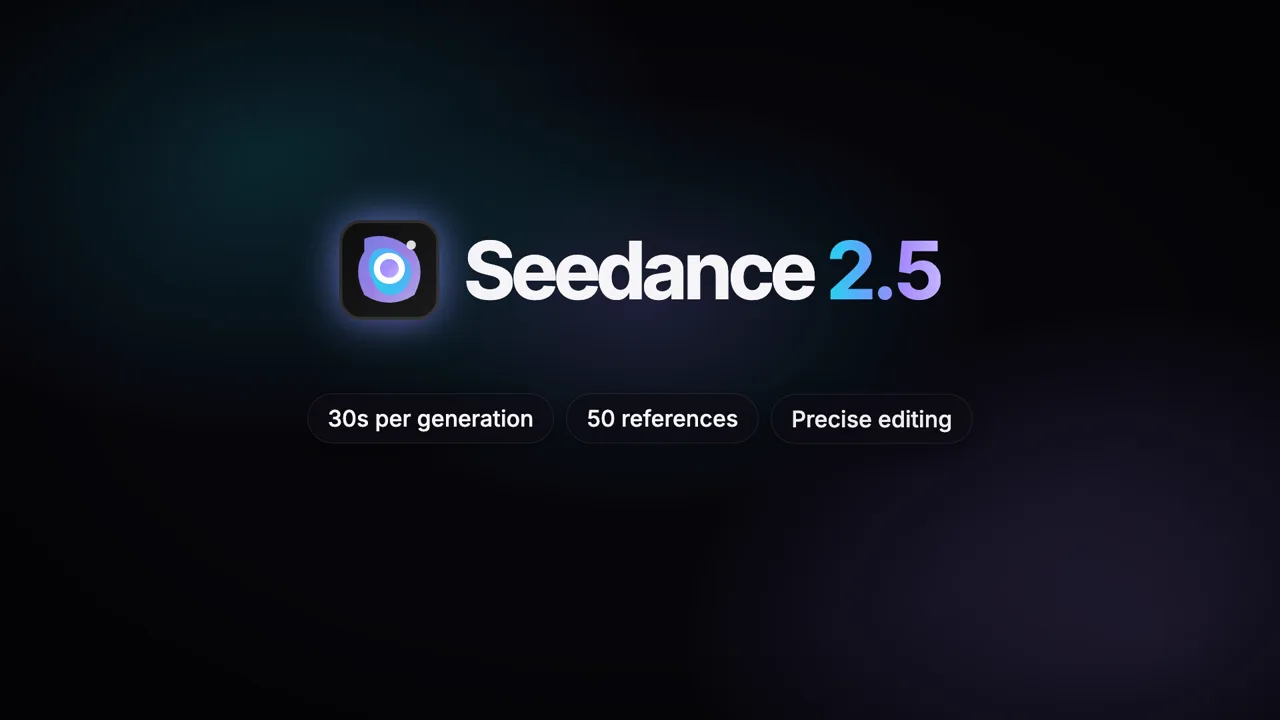
Seedance 2.5 is ByteDance’s latest AI video model from its Seed family. It turns a text prompt, a starting image, or a stack of references into a cinematic clip with synchronized native audio. It was released publicly on July 31, 2026, after being previewed at the Volcano Engine FORCE conference in June.
It can generate videos up to 30 seconds long, double Seedance 2.0’s 15-second limit, and accepts up to 30 images, 10 video clips and 10 audio files in a single prompt.
Watch this space for updates in the Hacks category on Running Wolf’s Rant.
Want to promote your business, event, product or service? We get more than 14,000 pageviews a month! Contact us for marketing and advertising options.