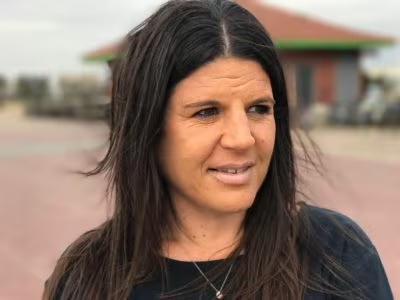

With the release of the new single and video ‘On a Dream’, South African songwriter and storyteller Carol-Ann Meltzer continues building a creative world that reaches far beyond music.
Through Khazimula, she brings together songwriting, poetry, storytelling, reflection, publishing and human connection into a project that encourages listeners to explore possibility and purpose.
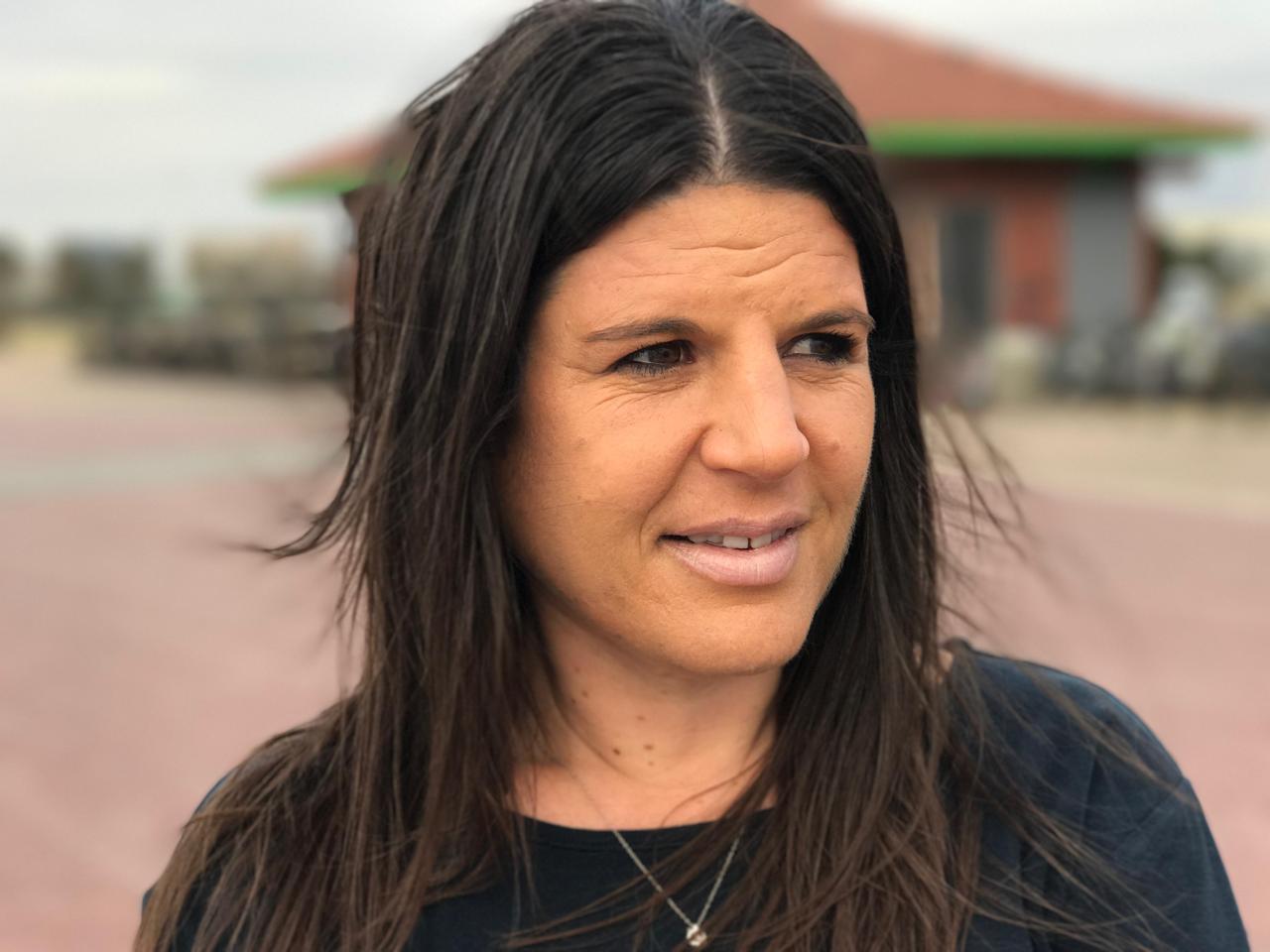
I caught up with Carol-Ann Meltzer to talk about creativity, collaboration, the unexpected moments that shape great songs, and some of the more personal stories behind the artist.
Looking back at your younger self, is there a moment where you realise today that a songwriter was already beginning to emerge?
“My mother often reminds me that by the age of two, I knew all my nursery rhymes by heart. That certainly didn’t mean I was going to become a songwriter, but I was already fascinated by words and melody.”
“There’s a saying that if you want to discover your calling, think about what you were doing when your mum called you in for supper. Some people were drawing, some were climbing trees or kicking a football. I was probably busy singing nursery rhymes. Looking back, I think those were the first little hints that songwriting was quietly finding me.”
Your work feels very cinematic. When Carol-Ann Meltzer is writing, does she see scenes unfolding in her mind before she hears the music, or does the music lead the story?
“One of the books that has had a profound influence on me is ‘The Artist’s Way’ by Julia Cameron. She encourages a simple daily practice, and I think that’s where so much of my songwriting begins. It’s less about waiting for inspiration and more about showing up consistently and making space for creativity to emerge.”
“When I write, I don’t usually know where the journey is going to end. I don’t sit down with a fully formed story or melody in mind. Instead, I take one step after another and allow the song to reveal itself. It’s a bit like climbing a mountain. You can’t see the view from the summit.”
“You just keep putting one foot in front of the other, and then suddenly you reach the top and discover something you never expected. Sometimes the music leads. Sometimes an image or a line appears first. Often, though, they seem to grow together. The greatest joy for me is that I’m still surprised by where the song takes me. In many ways, I feel as though I’m discovering it rather than inventing it.”
Many artists write to express themselves. Do you feel you write more to discover something you didn’t yet know?
“I think it’s both but, if I had to choose, I’d say I write to discover. Songwriting has become a way of learning about life, about people and about me. I rarely know where a song is going when I begin. I simply show up, put one word after another, and gradually something reveals itself.”
“Often, by the time I’ve finished a song, I’ve discovered something I didn’t know when I started. It’s almost as though the song has been teaching me rather than the other way round. That’s one of the things I love most about writing. It continually reminds me that there’s always more to learn, more to understand and more to wonder about.”
“I think that’s why I still find songwriting so exciting. Every new song is an invitation to discover something new. For me, songwriting isn’t about having all the answers. It’s about being willing to ask the next honest question and trusting that, somewhere along the journey, the song will reveal the answer.”
Collaboration seems to be an important part of your journey. What have Megan Marks and Mark Beling taught Carol-Ann Meltzer that has made her a better songwriter?
“Working with Megan and Mark has been an incredible privilege because they each bring something very different to the songs. Mark has an extraordinary ability to hear possibilities. He takes a simple lyric and melody and creates a musical landscape that I could never have imagined on my own.”
“He’s taught me that a song isn’t just about the words. It’s about creating an emotional experience. Megan has a beautiful gift for bringing honesty and vulnerability to every lyric she sings. Sometimes she’ll phrase a line or emphasise a word in a way that makes me hear my own song differently. She’s reminded me that a song only truly comes alive when someone connects with it emotionally.”
“Together, they’ve taught me that songwriting doesn’t end when you put down the pen. It continues through collaboration. When talented people bring their own gifts with generosity and respect, the song often becomes far greater than any one of us could have created alone.”
“One of the greatest lessons they’ve taught me is that creativity isn’t about protecting your ideas. It’s about trusting them enough to let other gifted people help them grow.”
You’ve spoken about believing in possibility. Has there ever been a moment where you almost abandoned a song that later became one of your favourites?
“I don’t think I’ve ever completely abandoned a song, but I have put dreams on hold. A good example is the Love It Together album. I wrote and composed the original versions years ago and, for a long time, they sat quietly in the background.”

Life moved on, and the project simply waited for the right season. Today, it’s incredibly exciting because those songs are being given a new life. I’m now recording the complete Love It Together album with Megan Marks and Mark Beling and hearing those songs come to life has been a real reminder that sometimes dreams aren’t abandoned, they’re simply waiting for the right time.”
“That’s taught me something important. Creativity has its own timing. Just because a dream goes quiet for a while doesn’t mean it’s over. Sometimes it needs to wait until the right people, the right experience and the right moment all come together.”
What role does silence play in your creativity? Are your best ideas found in busy moments, or when everything finally becomes quiet?
“I spend a great deal of time on my own, and I genuinely enjoy my own company. But silence, for me, isn’t really the absence of sound. My mind is often full of ideas, reflections and questions. I did spend a week at a silent meditation retreat, and it taught me the incredible value of becoming still.”
“There’s a real power in quietening the constant conversation around us because it helps us notice things we might otherwise miss. Having said that, I don’t think inspiration only arrives in silence. It can come while I’m out running from something on the radio, during a conversation, in a coffee shop, from a billboard, or even from a single sentence someone says in passing.”
“For me, creativity isn’t really about silence or noise. It’s about awareness. It’s about living with your eyes and heart open, paying attention to the world around you and being willing to notice the extraordinary hidden within the ordinary. That’s where so many of my songs begin. I think inspiration is everywhere.”
“The challenge isn’t finding it but living with enough awareness to notice it. In many ways, songwriting is simply discovering the hidden universe that’s already all around us.”

If someone could spend a day inside your creative process, what would probably surprise them the most?
“I think what would probably surprise people the most is that I have a kind of personal DJ playing in my head most of the time. Almost every situation reminds me of a song, a lyric or a melody. It’s as though my mind is constantly making connections between everyday life and music.”
“So, if someone spent a day with me, they’d probably discover that I’m constantly collecting ideas without even realising it. My creative process isn’t something that only happens when I sit down to write. It’s happening all day, every day. I’m simply paying attention. They’d probably leave smiling because they’d realise that, for me, almost every moment has a soundtrack.”
Your songs invite listeners to pause and reflect rather than simply consume music. Do you think audiences are craving deeper experiences again?
“I think we live in a world where we’re constantly consuming information. We scroll, we swipe and we move on so quickly that we don’t always give ourselves time to reflect. My hope is that people are beginning to long for moments that invite them to pause.”
“Not because life must be serious all the time, but because sometimes the most meaningful discoveries happen in the quiet moments of reflection. That’s what Khazimula is about. It’s not just about listening to a song. It’s about allowing the song to become the beginning of a conversation, with yourself, with someone you love, or even with life itself.”
“If ‘On a Dream’ encourages someone to stop for just a few minutes and see themselves or the world a little differently, then I feel the song has done something worthwhile.”
If Khazimula had a physical home somewhere in the world, what would it look like? Would it be a forest, a lighthouse, a library, a mountain cabin, or somewhere completely unexpected?
“Perhaps Khazimula’s real home isn’t a place at all. Perhaps it’s the place inside each of us where we’re willing to stop, listen and let our colours shine.”
Every songwriter has songs that audiences never hear. Are there unfinished ideas sitting in Carol-Ann Meltzer’s notebooks that you hope to revisit one day?
“I probably have more unfinished ideas than unfinished songs. When I first met my husband, David, one of the things we did was have a bonfire, and I burned a huge collection of my old notebooks. Looking back, there were probably all sorts of forgotten lyrics and ideas that disappeared in those flames.”
“Thankfully, I didn’t burn everything. I still have plenty of notebooks tucked away, filled with thoughts, phrases and song ideas that have never seen the light of day. Every now and then I open one and discover something I’d completely forgotten I’d written.”
“One of the wonderful things about songwriting is that no idea is ever truly wasted. Sometimes a single line that’s been sitting quietly in a notebook for twenty years finds its way into a brand-new song.”

What excites Carol-Ann Meltzer the most about where Khazimula could be five years from now?
“Five years from now, I hope Khazimula has become much more than music. I hope it’s a place where people come to find hope, inspiration and encouragement to let their own colours shine. I’d love to see the songs reaching people around the world, a Broadway musical, books being read, reflections being shared and new creative projects continuing to grow.”
“But more than any measure of success, I hope Khazimula becomes a reminder that every person has value, purpose and something unique to contribute. If, five years from now, people are saying, “Khazimula helped me see the treasure in myself and in others,” then I will feel incredibly grateful and blessed.”
If ‘On a Dream’ had a colour palette, what colours would it be?
“I’d say the palette begins with the deep blue of possibility, rises through the gold of hope and ends in a rainbow because ‘On a Dream’ is really an invitation to go all in, to believe enough in the dream to let your own colours shine.”
If you could invite three people, living or from history, to sit around a dinner table and talk about creativity, who would they be?
“This is a wonderful question. In no order, and with the greatest respect to all the remarkable people who are here and who have gone before us, I think I would invite Freddie Mercury, Oprah Winfrey and Nelson Mandela. Freddie Mercury because he had an extraordinary ability to move people through his voice.”
“Oprah Winfrey because she has a remarkable gift for touching the human spirit. Nelson Mandela because he showed the world that courage, forgiveness and vision can become one of the greatest creative forces of all. I think that would be an incredible conversation. I would probably spend less time talking and more time listening.”
What’s one everyday object you couldn’t imagine living without because it somehow fuels your creativity?
“I would have to say coffee, with tea as a very close runner-up.”
Which song, by another artist, do you wish you had written?
“‘Thank You for the Music’ by ABBA.”
If your life were turned into a film, who would compose the soundtrack?
“I think the composer would be Khazimula. Not because it’s my stage name, but because Khazimula has become the soundtrack of my journey.”
“Every song has found me at a different chapter of my life. Some arrived in seasons of joy, others through struggle, hope or gratitude. I never set out to write the soundtrack of my life but, looking back, that’s exactly what these songs have become. So, if my life were turned into a film, I’d simply let the songs that found me tell the story.”
Coffee at sunrise or tea at sunset?
“It reminds me of that old saying, you can’t have one without the other. For me, coffee at sunrise and tea at sunset belong together. One invites me to dream and the other invites me to reflect. I wouldn’t want to lose either. I see them as partners, not competitors.”
Beyond music, what forms of art inspire you the most? Is it books, paintings, photography, film, theatre, or something else entirely?
“To be honest, some of my greatest inspiration doesn’t come from art galleries or theatres. It comes from everyday life. Sitting in a coffee shop, watching people, listening to conversations and seeing the way people interact, I find humanity endlessly inspiring. Life itself is probably the greatest work of art I have ever encountered.”
You’ve described Khazimula as an invitation for people to let their colours shine. Has anyone ever unexpectedly shared how your music has affected their life?
“I hope that one day I’ll hear stories about how the music has touched people around the world. But if I’m honest, the person who’s been most affected by my music has been my beautiful son, Shane. From the very beginning, he’s been my greatest supporter.”
“We’ve spent countless hours listening to the songs together, dancing around the kitchen, laughing and imagining how they might one day become a stage musical. Long before anyone else heard them, Shane believed in them. Those moments mean more to me than I can put into words.”
“They remind me that music isn’t something we simply listen to, it’s something we share. It brings people together, creates memories and celebrates life. My greatest hope is that one day we’ll celebrate these songs together with audiences around the world. But whatever happens, Shane will always be the first person who truly believed in them, and for that I’ll always be deeply grateful.”
As Carol-Ann Meltzer continues to expand the world of Khazimula, ‘On a Dream’ stands as another step in a journey shaped by imagination, reflection and hope.
Whether through music, storytelling or the conversations her work inspires, her greatest ambition remains unchanged: encouraging people to discover their own light and embrace the possibility that every meaningful journey begins with the courage to dream.
I would like to tak this opportunity to thank Carol-Ann Meltzer for this interview. I wish her all of the best with her future musical endeavors.
Watch this space for updates in the Interviews category on Running Wolf’s Rant.
Want to promote your business, event, product or service? We get more than 14,000 pageviews a month! Contact us for marketing and advertising options.