

The global automotive market is undergoing a period of reconfiguration, shaped by changes in consumer behaviour, greater price sensitivity and a technological transition progressing at uneven speeds across regions.
Against this backdrop, several emerging markets have begun to show clear signs of recovery after years of volatility, financial constraints and supply-chain disruptions.
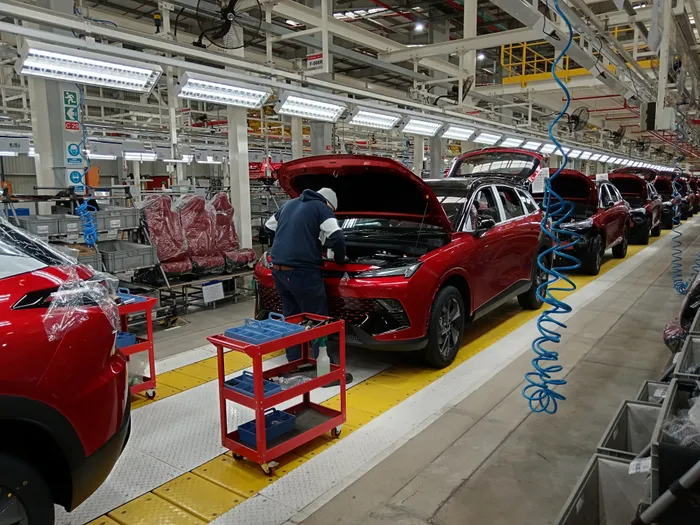
South Africa is one such case. Following a prolonged period of pent-up demand, the automotive sector posted a strong rebound in 2025, enabling the market not only to close the year on a positive note but also to reach levels not seen since before the pandemic.
Strong Momentum Builds Through the Second Half of 2025
Momentum gathered pace in the second half of the year and peaked in December, when new vehicle sales reached 48,983 units, according to data released by NAAMSA and the Automotive Business Council of South Africa.
This figure represented an increase of 7,882 vehicles compared with December 2024, equivalent to year-on-year growth of 19.2%.

The year-end results, however, also reflected a degree of month-on-month cooling, as sales fell short of the 54,896 units recorded in November, in line with typical seasonal patterns and following a period of strong activity in the automotive sector.
Toyota Retains Market Leadership as Rankings Shift Below
Within this overall performance, Toyota once again consolidated its position as the dominant player in the South African market.
The Japanese manufacturer’s local subsidiary sold 12,933 vehicles in December – slightly fewer than in November, but still comfortably enough to retain market leadership. Volkswagen reclaimed second place with 5,014 units, overtaking Suzuki, which closed the month with 4,961 sales.
Value-Oriented Brands Continue to Gain Ground
That shift carried symbolic weight, as Suzuki had surpassed Volkswagen for the first time in March 2024 and had maintained its lead since then, reflecting a broader consumer move towards more affordable options.
That shift in preferences has not disappeared, but rather become more nuanced. While Volkswagen regained second place in December, Suzuki remained close behind, and questions persist over whether Volkswagen’s figures – which include Audi sales – affect direct comparisons.
Beyond this debate, the underlying trend remains clear: the South African market continues to show growing openness to value-oriented brands and models, driven by household budget constraints and an expanding supply of vehicles produced in countries such as India and China.
Competitive Pressure Intensifies Beyond the Top Three
Outside the top three, Hyundai returned to fourth place with 3,068 units, once again ahead of Ford, which ranked fifth with 2,987 sales. Chinese brands continued to strengthen their presence, with GWM and Chery taking sixth and seventh positions respectively, while Isuzu and Kia completed the top nine.
The surprise of the month came from Jetour, which entered the top 10 for the first time since launching in South Africa in September 2024, outperforming Omoda and Jaecoo, which narrowly missed the cut.
Segment Performance Highlights Uneven Recovery
Looking at the market as a whole, December’s performance confirmed trends that had been building throughout the year.
Passenger vehicle sales rose 20.3% year-on-year, while light commercial vehicles increased by 23.7%, signalling a recovery in both household consumption and small- and medium-sized business activity. By contrast, the heavy transport segments recorded weaker results, with declines in truck and bus sales reflecting softer conditions in parts of the logistics and infrastructure sectors towards year-end.
A Return to Consumer-Led Demand
Demand composition also pointed to a return to more normal patterns. Around 90.8% of December sales were channelled through dealerships, while rentals accounted for 6.3%, government purchases 1.9% and corporate fleets 1%. This distribution suggests a more organic, consumer-led market after years in which fleet sales distorted the figures amid supply shortages.
2025 Delivers the Strongest Sales Result Since 2008
On an annual basis, 2025 closed with total vehicle sales of 596,818 units, representing growth of 15.7% compared with 2024 and the strongest result since 2008.
NAAMSA attributed the recovery to a combination of macroeconomic and sector-specific factors, including cumulative interest-rate cuts of 150 basis points since September 2024, historically low vehicle inflation of 1.5%, falling fuel prices and improved credit availability. Additional liquidity from the two-pot retirement system also helped unlock discretionary spending for many households.
What South Africans Bought in 2025
Consumer behaviour was clearly reflected in the model rankings. The locally produced Toyota Hilux remained the country’s best-selling vehicle, followed by the Corolla Cross, which led the passenger car segment.
Among imports, the India-built Toyota Starlet and the China-made Chery Tiggo 4 Pro ranked among the most popular models, reinforcing the growing importance of price and efficiency in purchase decisions.
Export Performance Shows Mixed Signals
Alongside the domestic rebound, exports have shown a mixed picture. In December, vehicle exports fell 10.4% year-on-year, although the full-year total rose 4.4% to a record 408,224 units. While passenger car exports declined, light commercial vehicle exports recorded strong growth, partially offsetting the drop and highlighting the diversification of South Africa’s automotive output.
A Cautiously Optimistic Outlook for 2026
Looking ahead to 2026, the outlook remains cautiously optimistic. With inflation projected at around 3.3% and GDP growth estimated between 1.4% and 1.6%, the industry expects momentum to continue, with new vehicle sales forecast to rise by between 9% and 11%.
Financing and Insurance as Key Demand Drivers
In this context, access to finance is once again central. The availability of personal loans and vehicle finance at more competitive rates, together with greater penetration of motor insurance tailored to new and electrified vehicles, is expected to play a key role in sustaining demand – particularly among buyers who prioritise cost predictability and protection in an economy that remains challenging.
Automotive Manufacturing at a Crossroads
For nearly a century, South Africa stood at the heart of vehicle manufacturing in Africa—a position that supported industrial employment, attracted foreign investment and established the country as a key export platform to Europe and other developed markets.
However, this long-standing leadership began to show cracks in 2025, as new production data revealed a shift in the regional balance, marking a turning point for the industry and raising questions about South Africa’s future competitiveness.
Morocco Overtakes South Africa as Africa’s Leading Producer
The clearest signal came from North Africa. Morocco overtook South Africa to become the continent’s largest vehicle producer after reaching the milestone of one million units manufactured in early December 2025. This represented an increase of around 79% compared with the 559,645 units produced in the whole of 2024, underscoring the speed at which the country has climbed the ranks over the past 15 years.
Sluggish Growth Raises Concerns for Local Production
South African production showed signs of stagnation instead. Between January and November 2025, 554,613 vehicles were manufactured – only marginally higher than the 548,819 units produced over the same period a year earlier, a pace insufficient to maintain continental leadership.
Diverging Industrial Strategies Shape Outcomes
The comparison highlights diverging trajectories. While Morocco accelerated its production expansion, South Africa advanced at a far more moderate pace, constrained by structural limitations and a challenging operating environment.
Even with a recovering domestic market and annual sales reaching 596,818 units in 2025, local manufacturing capacity failed to match this momentum with proportional growth in output.
How Morocco Built a Manufacturing Advantage
Morocco’s rapid ascent has been anything but accidental. Over the past 15 years, the country has pursued a coherent industrial strategy, supported by tax incentives, free trade agreements with the European Union, the United States and China, and close coordination between the public and private sectors.
This framework facilitated the establishment of Renault plants in 2012 and Stellantis facilities in 2019, significantly expanding production capacity and export reach.
Electric Vehicles and the Technology Gap
The strategy also included an early move into electric vehicles, with the production of the Opel Rocks-e since 2021 and the forthcoming launch of the Dial-E by Neo Motors – the first fully Moroccan-designed electric vehicle. South Africa, by contrast, is entering this transition later.
Fully electric vehicles are not yet produced locally, and a 150% tax incentive for companies adapting plants to manufacture new-energy vehicles is only set to be implemented from March 2026.
Energy Infrastructure as a Competitive Factor
Energy remains another critical factor. Morocco has invested steadily in renewable energy, achieving a cleaner and more stable power mix that lowers costs and enhances its appeal to global manufacturers.
South Africa, meanwhile, continues to rely heavily on fossil fuels and has endured years of power supply disruptions that have weighed on industrial productivity and raised operating costs.
A Defining Moment for South Africa’s Automotive Industry
As a result, South Africa’s displacement as Africa’s leading vehicle producer is not the outcome of a single factor, but rather the accumulation of differences in industrial policy, energy infrastructure and the speed of technological adaptation.
The challenge ahead will be to regain competitiveness in an environment where African automotive manufacturing is being reshaped – and where leadership is no longer guaranteed by history, but by the ability to anticipate and respond to global market shifts.
Watch this space for updates in the General News category on Running Wolf’s Rant.
🐺 Support Us: Buy us a coffee, it will help us to bring you more content.
📬 Become part of the Wolf Pack: Subscribe to our newsletter to stay in the loop.
🧠 Explore our Knowledge Hub: Check out our Knowledge Hub for more opinions, facts, technology and more.
📐 Afrikaanse Mense: Check bietjie ons Afrikaanse Hoekie uit.
🔥 Popular Articles: See what others are reading in our Popular Articles.









Featured Articles




Looking for a gift for that special person in your life? Check out Netflorist.co.za, South Africa's top online florist and gift service. They offer flowers, gifts, and hampers for all occasions AND reliable nationwide delivery.
